
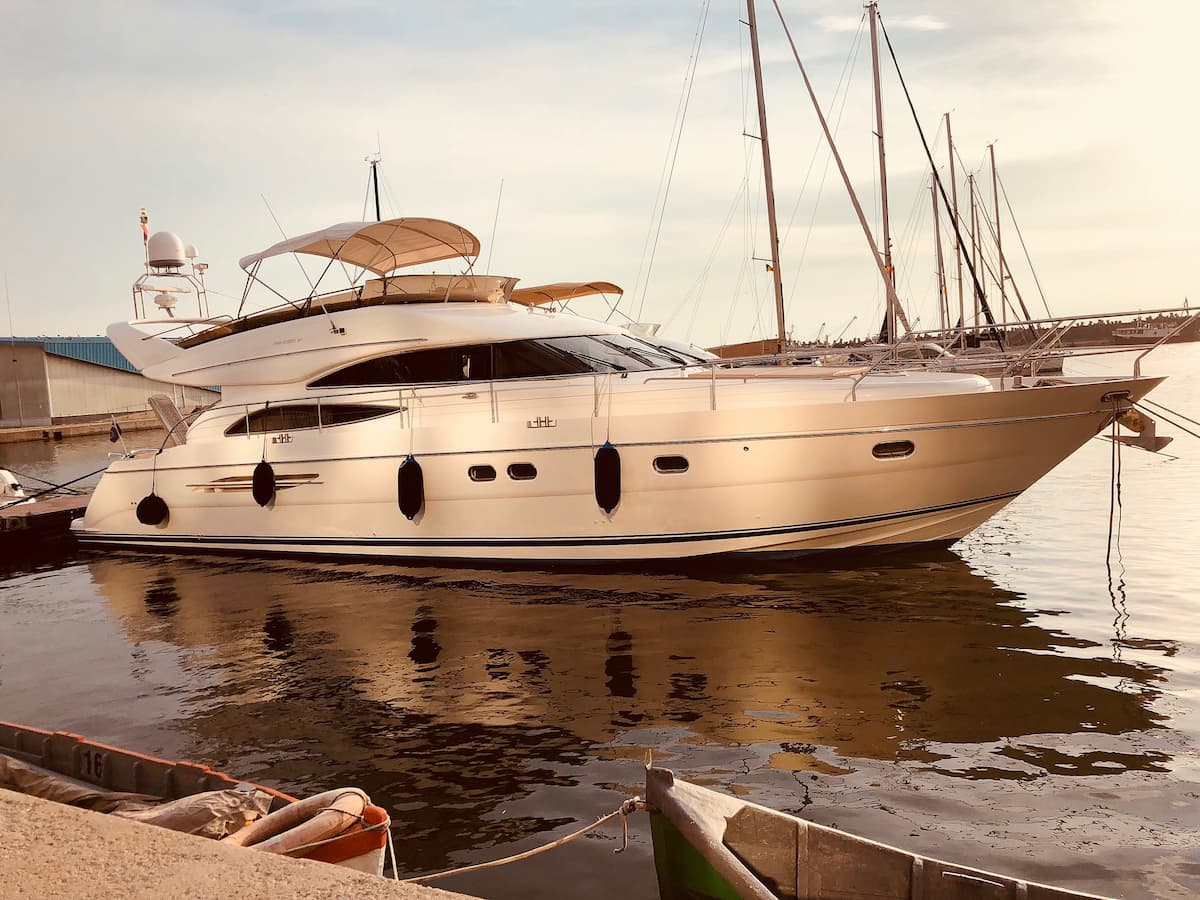
Uninspected yacht charters are not a thing in Australia, and anyone who tells you otherwise is selling you something. Before we get to why, it helps to understand what sits behind every safe day on the water, because that is what a survey is really protecting.
Why owning a yacht is a labour of love
Not too many people own their own yacht. It’s a big purchase, not just because of the price and prestige, but mostly because of the incredible amount of work that goes into it. There is upkeep and maintenance above and below water, inside and out, right through to taking her out on the water. It takes a great deal of knowledge of the vessel’s build and capability, plus navigation, the ropes and knots, shoreline and reefs, maritime markings, general maritime rules, water currents and weather. Whew.
Someone who isn’t interested in the logistics but likes the idea of owning a yacht, because it looks good or it’s good for business, has another option. They can pay a boating enthusiast to look after the vessel. That person handles the essential care and keeps everything shipshape, so the boat is ready whenever the owner feels like a cruise.
Talking about yacht maintenance is not even slightly romantic, so you won’t get wind of it around town. Still, owning a yacht, or any pleasure vessel, is a labour of love. You have to be passionate about understanding your vessel inside and out, at all times. It’s a purchase to be proud of, but also one to have real respect for.
That workload is the whole reason chartering makes sense for most of us, and also the reason survey rules exist. A vessel that is not maintained properly is a risk to everyone on board.
What a charter vessel is and why people hire one
For most people the most cost-effective and fun way to enjoy sailing is to charter a vessel for a few hours, a day or even a week. There are plenty of options, from a small family excursion to sport fishing with mates, an intimate get-together or an amazing party on the water. If you want to browse what is on offer, our yacht charters page is a sensible starting point, and the Whitsundays boat and yacht charters listings show how wide the choice is in one region.
A charter vessel is a yacht that is paid for privately for hired activities like fishing, touring or sightseeing. Typically the hire is completed through a commercial business connected to a specific activity, such as fishing adventures or pleasure cruises.
You can charter a vessel without any boating or sailing experience, because the staff come as part of the package. They are there to look after your needs and provide everything required for the full luxury experience. That is quite different from a bareboat hire, where you take responsibility for the boat yourself; our explainer on what a bareboat charter involves sets out the difference.
Reasons to charter a yacht or pleasure vessel
- As a wedding or reception venue
- Birthday celebration
- Party with a DJ
- Wedding proposal
- Family reunion
- Work function
- Entertaining business partners
- Fishing adventure
- Scenic excursion
- Family bonding experience
Whatever the occasion, you are handing over responsibility for a group of people, sometimes with food, drink and music in the mix, to a business you may have only just met. That is why the paperwork matters.
Why a surveyed vessel matters
Now that you know a lot of work and money goes into maintaining a boat, it might not surprise you that some commercial businesses don’t have a passion for it, or don’t want to dig into their profits to look after their investments. The problem is that, unless you know a lot about boats and the vessel you are on, serious dangers and significant problems will probably go unnoticed. A cracked fitting, tired rigging, a dodgy bilge pump or an out-of-date flare kit all look fine to the untrained eye.
Here’s the thing though. To stop worrying about your experience, you have to put complete faith in the company you booked with. Is that yacht soundly built? Do the staff have the knowledge to navigate, to communicate and to keep you all safe on board? Are they operating at the right capacity for this particular vessel’s size and purpose? There is a way to know for sure.
Safety checks, compliance checks and process surveys exist to protect you and the people you are sailing with. In most cases a completed survey is the only way to check the legitimacy of a charter purchase. I’d argue it’s the single most useful thing a customer can ask about, far more telling than glossy photos or a confident sales pitch.
Boating accidents are deadly ones. Panic and water are an easy combination, especially if it’s dark and visibility is low, and that equation can turn to nightmare conditions very quickly. Make sure the vessel you charter is safe. There are plenty of ways to do that without inspecting it yourself or knowing anything about boating, and the next sections cover them.
Certificate of Survey and Certificate of Operation
There is a marine board that takes boating safety very seriously. It arranges a survey of all commercial charter vessels and makes sure they comply with health and safety regulations in every way possible. So make sure you are hiring a surveyed vessel.
When a vessel has been surveyed it is given a certificate that proves everything is in order, called the Certificate of Survey (COS). When the operating procedures have been checked, the vessel is given a Certificate of Operation (COO). Think of the first as a check on the boat itself and the second as a check on how it is run.
By law the COS and COO will be displayed on the vessel, so it’s a great opportunity to look over the vessel you are going to charter at the same time. If you can’t see them, ask. A legitimate operator will point to them without fuss.
In some cases a COS and COO are combined and included as one document. This is evident from the details listed within the checks, which will show that it covers both the vessel and the charter operations.
Under Marine Safety National Law it is an offence to operate a commercial vessel without a valid COS and COO. Private owners or commercial businesses who operate without this screening have not been given any safety clearance. There is no guarantee that these vessels are safe or that they are operating to appropriate safety standards.
What the marine safety survey takes into account
If a certificate is issued, it means that:
- The vessel’s design, construction and equipment have all been inspected by Maritime Safety Victoria.
- Practices onboard have been reviewed by Maritime Safety Victoria.
- The person operating the vessel is competent and has the capacity to operate safely.
In plain terms, a surveyor is looking at three things: is the boat sound, is the way it is run sensible, and is the person in charge up to the job. A pass on one without the others is not much comfort. A well-built yacht with an untrained skipper is still a problem, and so is a great skipper on a poorly kept boat.
For more information you can visit the Australian Maritime Safety Authority (AMSA) website, which is the national body for commercial vessel safety.
What to ask to see before booking a charter
Here’s what to ask to see before booking a charter:
- The Certificate of Survey (COS)
- If not included on the COS, also ask to see the Certificate of Operation (COO)
- The qualifications of the person operating the vessel on the day of hire (the master)
Here are the certificate details to look out for:
- The operating area
- The maximum number of people allowed
- Number of crew required
- Approved safety equipment
- Any additional certification requirements for competency in the region or that apply to a particular vessel type
A few of these deserve a closer look. The operating area tells you where the vessel is approved to go; a boat certified for sheltered water has no business out in open sea, however calm the day looks. The maximum number of people is a hard limit, not a suggestion, so a party booking that pushes past it is a red flag. The crew number matters because a vessel can be perfectly sound yet under-staffed for the guests aboard.
A common mistake is to ask only whether the boat is “licensed” and accept a yes. Ask to see the actual documents instead, and check that the details match the trip you have booked. If you are comparing vessel types, our pages on sailing yachts and sailing catamarans show the sort of operators who should be able to answer these questions easily.
Before you charter a yacht, make sure the vessel is safe, the crew are qualified, and all the operations are above board.
Inspected vs uninspected yacht charters: what it means in Australia
Don’t be fooled by swift talk. Every country has different terminology and regulations around vessel inspections. In Australia there is no such thing as a compliant uninspected yacht charter. If you don’t see a survey certificate, don’t hire the vessel. It’s simply not worth the risk. Most commercial operations are happy to comply and undergo safety checks.
If anyone tries to pull a fast one, saying they answer to a different body that approves uninspected yacht charters, this isn’t Australian marine ruling. In the U.S.A. it is common for different bodies to handle different licences and regulations for commercial vessels, and in that case it’s true that not all commercial vessels are required to be inspected. Those exempt from inspection can operate under slightly different regulations in terms of their operating ability and staff. However, these are not the operating bodies in Australian waters.
If you are interested in chartering a yacht in US waters, it’s best to check with the nearest Coast Guard Marine Safety Office for their safe practice regulations. If you are interested in a bareboat charter, specifically ask them for the NVIC 7-94 laws to see what you need to be aware of in terms of safety and compliance. Back home, if you are weighing up a self-skippered trip, read whether you need certification to charter bareboat as well.
Your safety is worth your time and money, so be sure about chartering your yacht with legal, secure pleasure boat companies, so that you can enjoy everything the luxury experience has to offer, with peace of mind.